Welcome admirers of Bear McCreary and Music World Building!
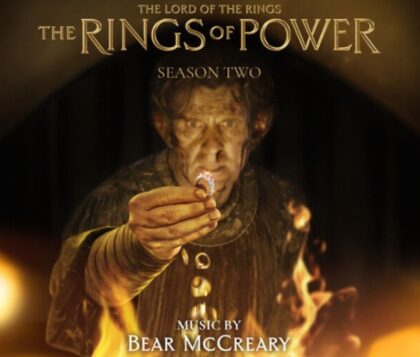
Image courtesy Amazon MGM Studios via Bear McCreary website
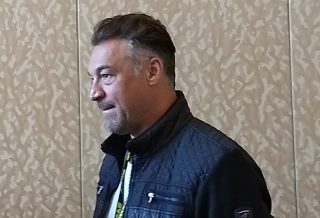
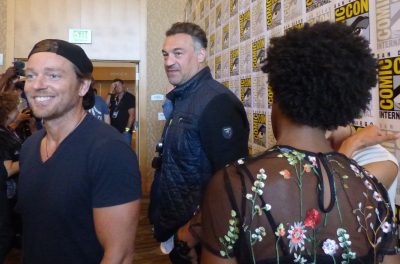
As we bring our coverage to a conclusion with only two more scheduled interviews remaining (including this one), we bring you Bear McCreary, the legendary composer in the Music World Building Press Room at San Diego Comic-Con!
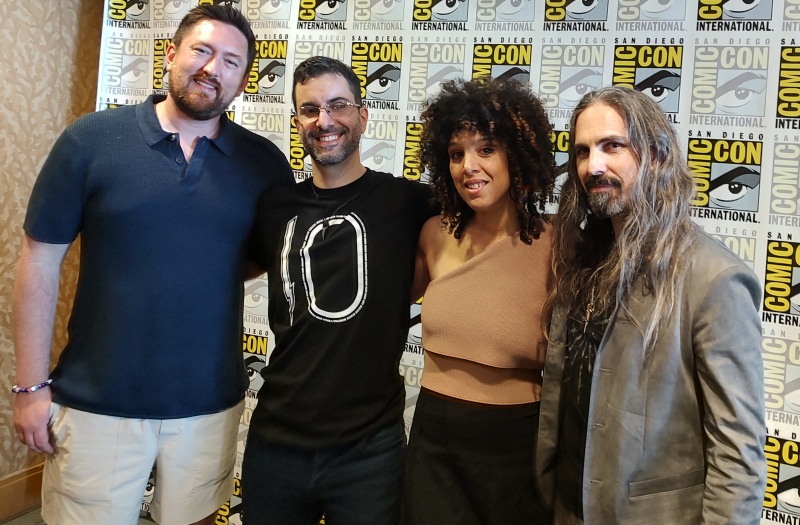
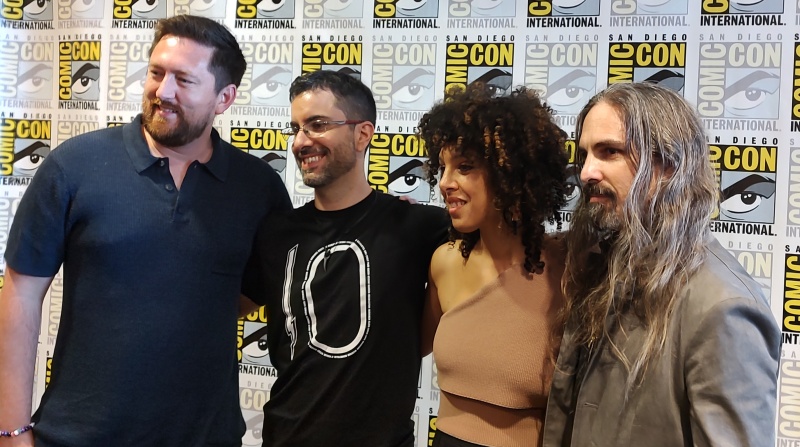
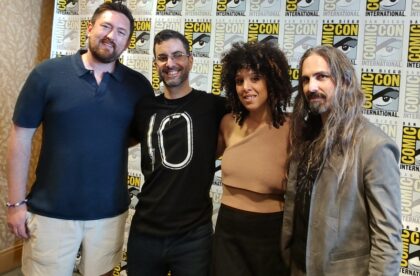
(L-R) Kyle D. Higgins, Matias Bergara, Raya Yarbrough. Bear McCreary. Image by Kenn of WormholeRiders #TeamWHR
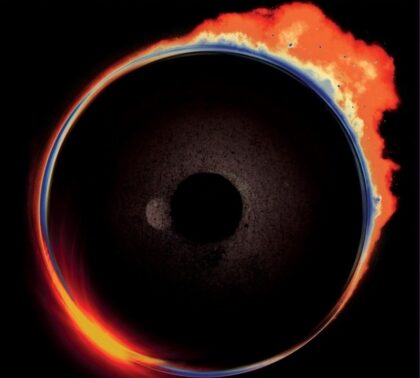
Our time with these extremely talented individuals was outstanding as we learned about The Singularity and the aforementioned entertainment projects that encompass the magical Music World Building that accentuates everyone’s experience and enjoyment for movies, scripted science fiction television, streaming series as well as stage plays that they watch and listen to.
Importantly, without music composing in movies, television series and theater stage plays, entertainment would be far less exciting. Music is something that viewers often, but shouldn’t take for granted. We express our genuine thanks to Gary Miereanu for making this fabulous Press Room happen and hope that you enjoyed the Music World Building interviews included above and The Singularity trailer below.
We will be back soon to conclude reporting on our adventures this year at San Diego for Comic-Con 2024 with an interview with a famous Graphic Novelist, including more exclusive interviews featuring details dished to fans during Press Rooms that we covered! In the meantime, please feel free to share this article with your friends, co-workers and or your family!
We look forward to you visiting our dedicated review and analysis web site here in the future! Or as many of our readers and visitors often do, visit TeamWHR on X, or visit me on Twitter by clicking the text links or images avatars in this news story. I and TeamWHR look forward to Seeing You on The Other Side!“
On Thursday July 25, 2004 we concluded our first fantastic day of San Diego Comic-Con with a real treat when TeamWHR was provided the honor and privilege to interview primary cast members of Tim Travers and the Time Travelers Paradox in their exclusive Press Room to share. Tim Travers and the Time Travelers Paradox is a rare combination of comedy, fantasy, science fiction that has blown audience minds for it’s creative genius at film festivals across North America!
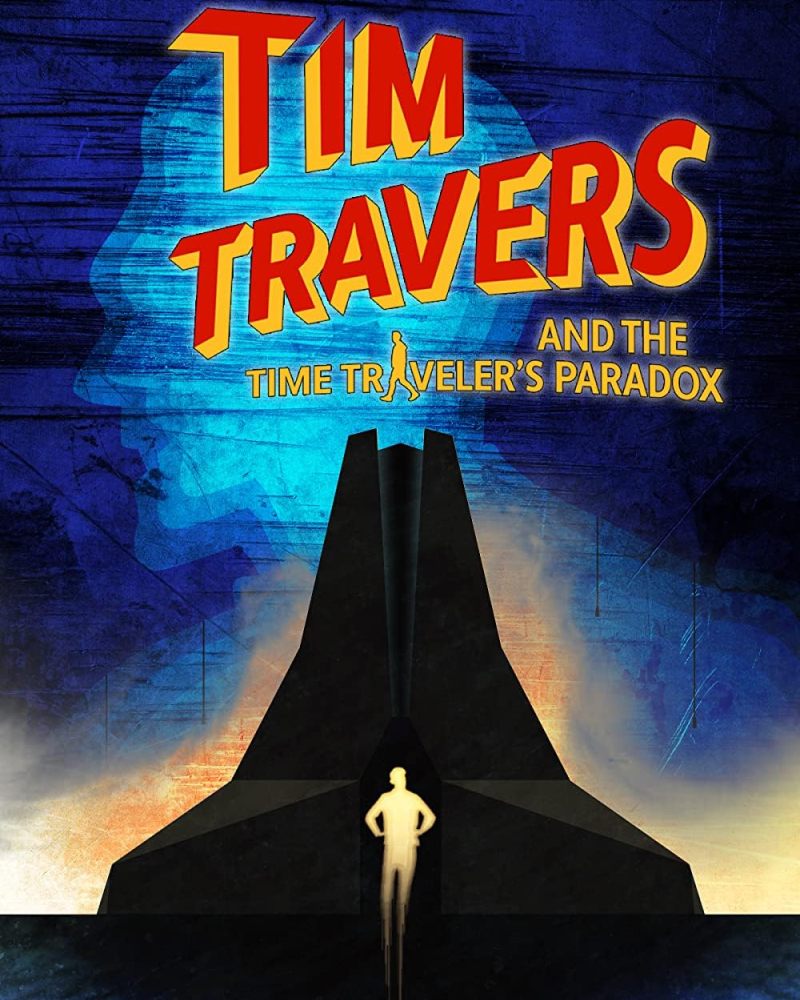
We describe this outstanding production as follows: Tim Travers is a self hating mad scientist who created a time machine to kill himself due to his self inflicted challenges in life. Instead, Tim ends up pursuing the impossible time travelers paradox when he attempts to kill himself to erase his existence from the timeline. A bit like parts of the Back to the Future trilogy in which the universe is not destroyed when duplicates appear and meet each other, Tim is unable to complete his suicidal mission, ending up replicating himself over and over again!
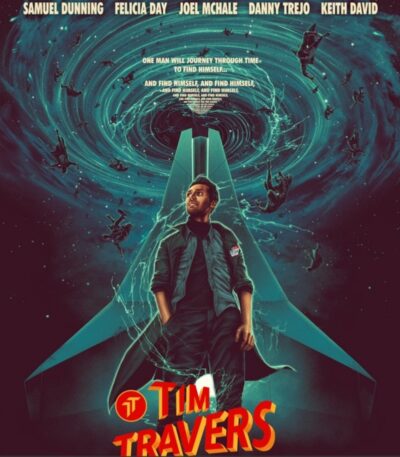
Image courtesy Tim Travers Movie
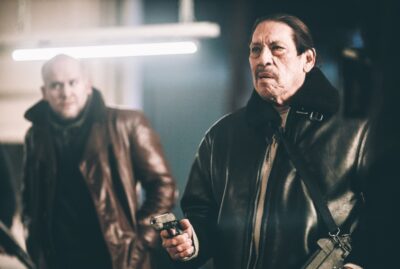
The film is accentuated with several guest star appearances when Tim meets an international crime syndicate boss named Royce (Danny Trejo) who Tim ticks off, with an interesting character named The Simulator (Keith David), which is followed by an encounter with a radio host conspiracy theory named James Bunratty (Joel McHale). Tim really goes out on a time tree limb when attempting to date a character named Delilah (Felicia Day) who we learn is a dangerously unstable female. In the end Tim makes many more copies of himself, several of which represent poor aspects of himself, forcing him to deal with the mess he has created in often hilarious and humorous fashion!
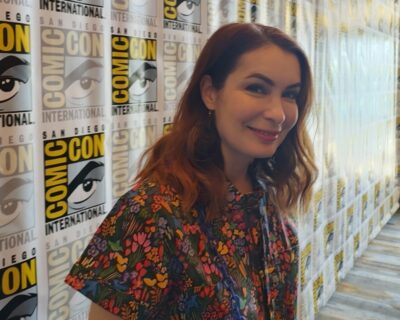
Image by Kenn of WormholeRiders #TeamWHR
A fantastic new film recently completed earlier this year, Tim Travers and the Time Travelers Paradox features a time traveling wormhole theme that is a delightful romp for science fiction movie admirers the world over with a starring member who we have followed for many years, the one and only award winning Felicia Day!
What drew me to this film in the first place is Ms. Day herself. In fact I was beyond pleased to see Ms. Day again after I had met her and reported on her roles in Eureka and The Guild in previous years covering the world’s largest Pop Culture event at San Diego Comic-Con.
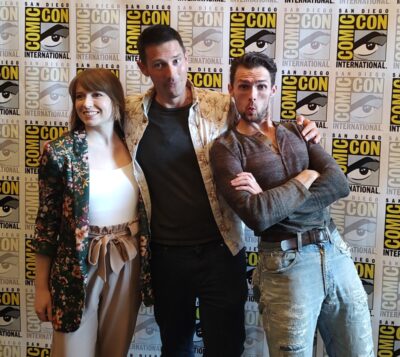
Image by Kenn of WormholeRiders #TeamWHR
Day is a co-star and an Executive Producer for Tim Travers and the Time Travelers Paradox. This talented individual has starred in over one hundred sixteen television series and movies, produced twenty-one entertainment products, and written eight productions in her career is still going gangbusters as evidenced by her dual role as EP and co-star.
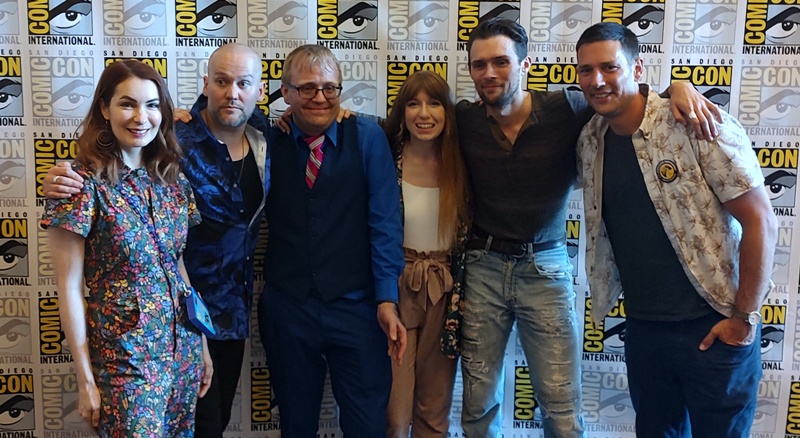
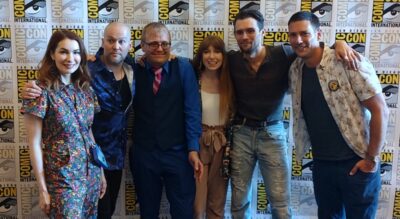
Written and directed by Stimson Snead, we were ecstatic to interview several of then the movie stars including Samuel Dunning as Tim Travers, Felicia Day as Deliah, David Babbitt as the alternate reality Tim Travers Lookalike, and Nicole Murray as the bartender who often gets caught right in the middle of the antics of this terrific time travel tale.
(L-R) Felicia Day, Stimson Snead, Ben Yennie, Nicole Murray, Samuel Dunning and David Babbit
Different that most time traveling entertainment products, the film features an exciting ensemble cast with a story arc features Tim Travers going back in time to kill himself producing a series of unanticipated events that ripple across the multiverse.
Utilizing a comedic flair to accomplish what no other time travel film has been able to accomplish to date, the antics of a person who should not exist! The premise creates a science fiction masterpiece with a comedy undercurrent highlighted in the official trailer below courtesy Seattle International Film Festival!
We will be back soon to continue reporting on our adventures this year at San Diego for Comic-Con 2024, including exclusive interviews! In the meantime, please feel free to share this article with your friends, co-workers and or your family!
We look forward to you visiting our dedicated review and analysis web site here in the future! Or as many of our readers and visitors often do, visit TeamWHR on X, or visit me on Twitter by clicking the text links or images avatars in this news story. I and TeamWHR look forward to Seeing You on The Other Side!“
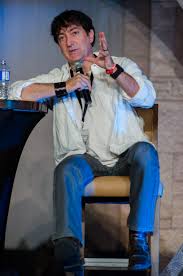
Peter Kelamis was born in Australia, and now resides in Canada and the United States.
Peter is a man of many nations, Peter’s family is of Greek origins. He has contributed to a variety of acting gigs as well as voice work and outstanding stand-up comedy!
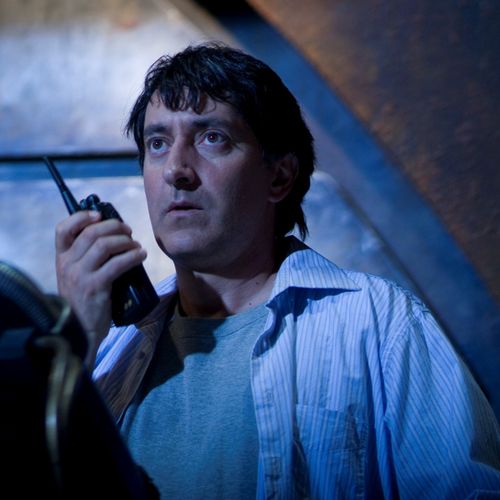
Peter has made guest appearances on all three of the longest-running North American science fiction series: The X-Files (1993), Stargate SG-1 (1997) and Smallville (2001) before becoming a featured cast character as Dr. Adam Brody in the famed MGM Studios final Stargate cable broadcast television series, Stargate Universe.
Peter has also had memorable recurring roles in Beggars and Choosers. Peter also voiced the Reaper in the video game Devil Kings as well as providing the voice of Byrne in the CGI animation, Dreamkix.
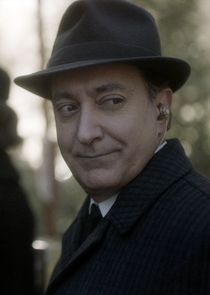
Peter Kelamis as Richie in The Man In The High Castle
Most recently he appeared in Canada’s own very successful series When Calls the Heart and a shorter-lived series, iZombie.
In 2007 Peter won a Leo award for Best Screenwriting in a Music, Comedy, or Variety Program or Series.
Peter is also known for his superb stand-up comedy which is available on Youtube.
Thanks to Kenn for staging additional images, the featured video, and, many thanks to you for stopping by WormholeRiders News Agency!
Please feel free to leave a comment here, click an icon below to share this interview with your friends, or you can visit and follow me on Twitter by clicking on my avatar to the right.
Here at Team WHR we continue our SDCC 2017 coverage of Van Helsing when we were honored to be invited to interview several of the series stars at San Diego Comic-Con 2017 courtesy of the great team at SYFY.
Our next special interview if none other than the awesome Aleks Paunovic who portrays the nefarious Julius in Van Helsing
Aleks Paunovic is an actor whom we have admired for many years. #TeamWHR first had the opportunity to interview Aleks in 2010, when his name was becoming well known around the world.
Multi-talented Aleks Paunovic has amazed his admirers in his role as Julius, creating much excitement in the Van Helsing story arc as the leader of the clan of vampires out to exterminate the human survivors in season one of the series, at one time capturing lovely Vanessa Van Helsing (Kelly Overton) in the series!
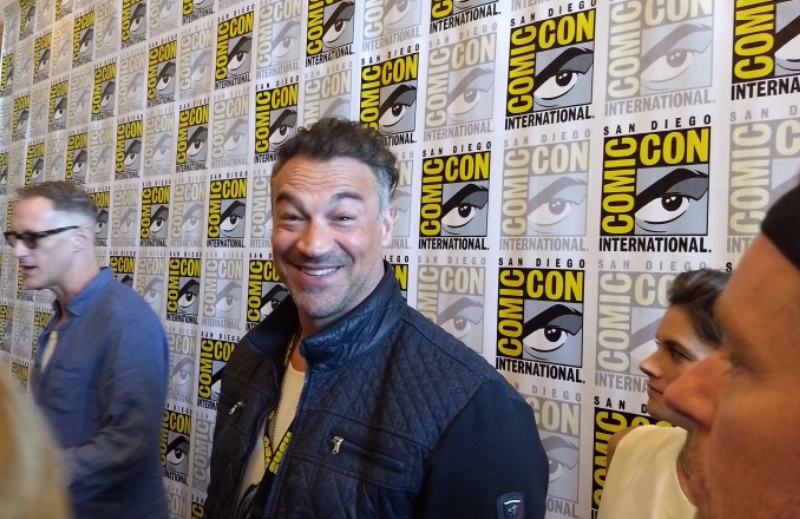
SDCC 2017 Aleks Paunovic with Jonathan Scarfe
Imagine our, and everyone’s sheer delight to learn that not only is Aleks character Julius returning in season two of Van Helsing on SYFY, and to ice the cake so to speak, Aleks Paunovic appeared in San Diego for his first time at Comic-Con 2017 representing the series before he will return to our screens later this year in 2017!
Finally, as we concluded our time with Aleks, he was nice enough to do a shout out to one of his greatest admirers, Mona Per. Mona, like Aleks is a nice person who often expresses her admiration for Mr Paunovic on Twitter featuring complimentary pictures and downright fun tweets. Thanks Mona!
We enjoyed our time with Aleks in the Press Room for Van Helsing, and hope that you enjoy our interview with this amazing actor. Thanks again Aleks!
Please feel free to share this article with your friends, co-workers and or family and to leave your comments! We look forward to you visiting our Conventions Corner and Main Blog web sites when we release more of #TeamWHR’s exclusive Van Helsing, Ghost Wars and 12 Monkeys interviews from SDCC2017.
See you soon in the near future!
Or as many of our readers and visitors often do, visit WHR on Twitter, WHR on Facebook or visit me on Twitter by clicking the text links or images avatars in this news story. I and the WHR team look forward to Seeing You on The Other Side!“
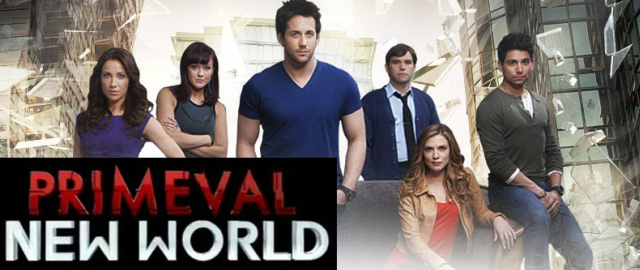
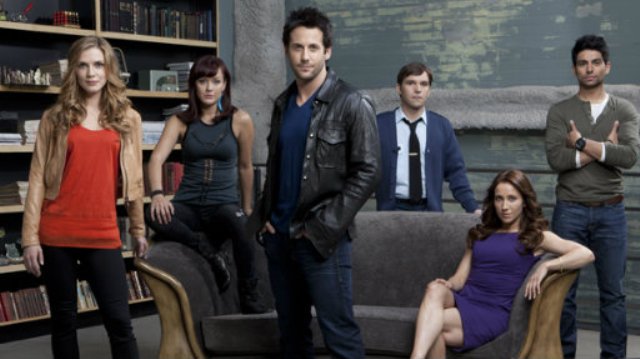
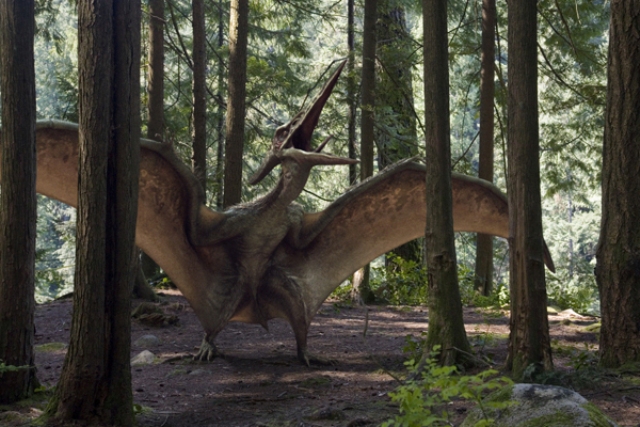
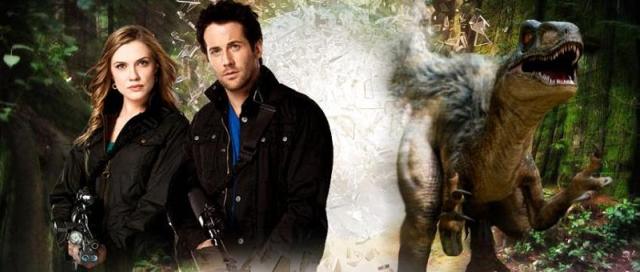
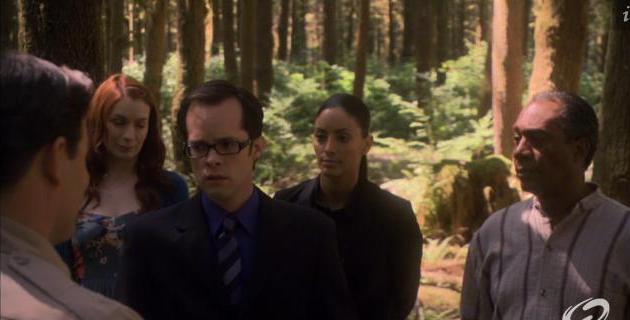
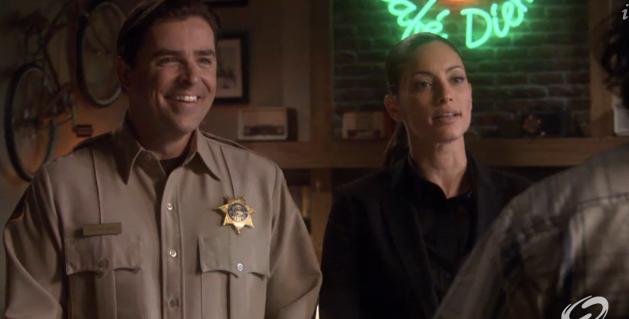
Set against the backdrop of the Pacific Northwest, “Primeval New World” Is the North American spin-off of the popular U.K. television series, “Primeval”, and follows a specialized team of animal experts and scientists who discover dinosaurs and other dangerous predators emerging onto the streets of modern-day Vancouverthrough strange anomalies in time.
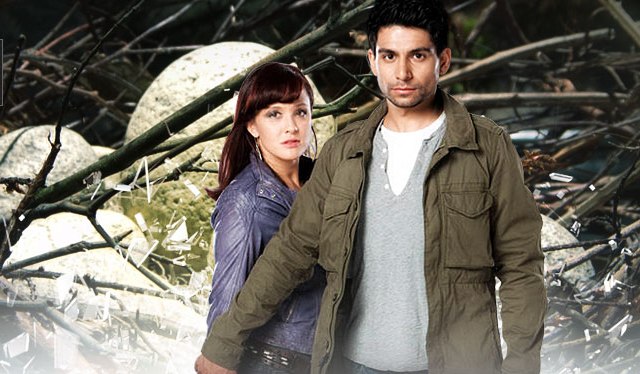
Primeval New World stars Crystal Lowe as Toby Nance, a young physics prodigy, who is Evan Cross’ (Niall Matter) internet, computer whiz, Niall Matter (Eureka) as the genius inventor and dinosaur hunting hero Evan Cross, Sara Canning (Supernatural, The Vampire Diaries) as Dylan Weir, predator attack expert and specialist in animal behavior, Danny Rahim (Unforgiven, East Enders) as Mac Rendell, the team’s action hero, marvelous Miranda Frigon as Angie Finch, the teams solid anchor touchstone, and Geoff Gustafson as Lt. Ken Leeds, an enigmatic Canadian military misfit.
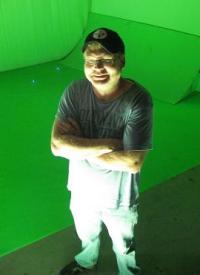
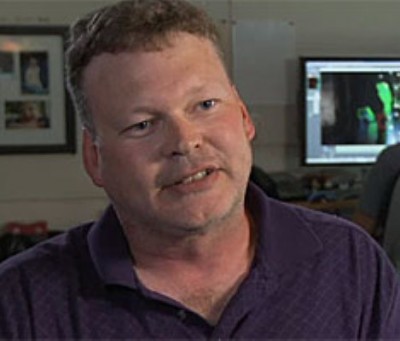
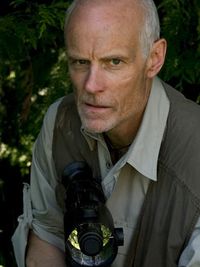
Mark is well known for his work on Stargate SG-1, Stargate Atlantis and Stargate Universe and has been working with visual effects for almost twenty years. Back in 2011 after Stargate Universe was cancelled, Savela and partner, Ken Kabatoff pitched a visual effects heavy pilot called Echoes, which according to our sources is still being considered for future full series production.
Together, Savela and Kabatoff gathered up most of the SGU cast and crew to shoot a short pitch for the pilot. Sounds like terrific loyalty and solidarity, but it was also very clever, since Savela is known in the industry as an FX genius.
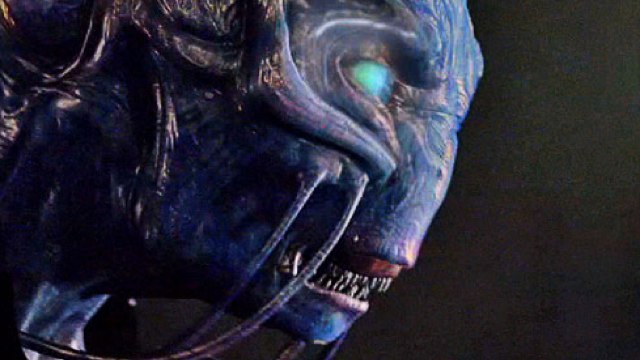
With Mark Savela on board, the series that is CG alien heavy, looks great because his aliens and spaceships work on SGU has been nothing short of stunning. Unfortunately, Stargate Universe, although a groundbreaking series, did not get off the ground. However, with his special effects skills, did not leave Mark without a project for long before he joined Primeval New World.
Thanks to Kenn for final staging of audio video embedding in this news article and thanks to you for stopping by WormholeRiders News Agency! We look forward to seeing you for our exclusive interview this Sunday at 8PM Eastern and 5PM Pacific!
Please feel free to leave a comment here, click an icon below to share this interview with your friends, or you can visit and follow me on Twitter by clicking on my avatar to the right.
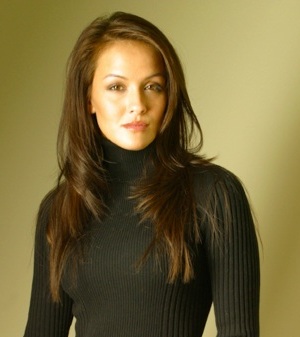
Something is indeed in your television screen as our legally selected theme song indicates. Our special guest is none other than gifted Vancouver native, Crystal Lowe, a regular in science fiction and thriller films and television, a leading lady appearing in Space Channel’s new original mythological/action series “Primeval New World”!
Set against the backdrop of the Pacific Northwest, Primeval New World Is the North American spin-off of the popular U.K. television series, “Primeval”, and follows a specialized team of animal experts and scientists who discover dinosaurs and other dangerous predators emerging onto the streets of modern-day Vancouverthrough strange anomalies in time.
Both existing fans of the Primeval brand, and Canadian fans of Space channel’s exciting new show Primeval New World are sure to be excited as Evan Cross’s team deals with new dinosaur adventures!
The former model is also easily recognizable from her starring role as Vala Kandorian on the final season of “Smallville”, and continues to showcase different sides of her outstanding career work through strong performance portraying interesting characters on television and in film!
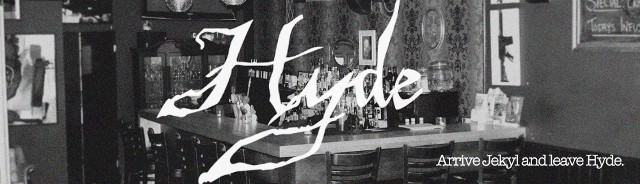
Crystal has also had an international childhood, living in Hong Kong for many years and learning to speak Cantonese fluently. Aside from her busy acting career, this very intelligent and forward thinking young woman has gone into business, opening up a restaurant called Hyde. The restaurant is located at 2960 Main Street in Vancouver with superb cuisine. Hyde Restaurant sports a great tag line “Arrive Jekyl and Leave Hyde!”
Thanks to Kenn for final staging of audio video embedding in this news article and thanks to you for stopping by WormholeRiders News Agency! We look forward to seeing you for our exclusive interview this Saturday at 8PM Eastern and 5PM Pacific for our exclusive interview with Crystal Lowe!
Please feel free to leave a comment here, click an icon below to share this interview with your friends, or you can visit and follow me on Twitter by clicking on my avatar to the right.
Welcome back to the second part of Eureka, A Celebration of Excellence. Once again I would like to thank everyone of the cast and creators of Eureka who made this special report possible. Thanks also to Kenn and Patricia of WormholeRiders News Agency for the privilege in posting my report here for your enjoyment.
We left off part one with the departure of Ed Quinn during season three, and the arrival of new cast members and a change in the show for season four. With episodes of Eureka’s fourth season still airing, and production of the fifth year wrapping up in Vancouver, Paglia and Miller were anxiously awaiting word from the network on a sixth season order. Ratings, while not at the heights they had been, were still strong, and creatively the series was firing on all cylinders.
But there were issues to be addressed. The acquisition of NBC (and by proxy, all of its smaller cable networks, including Bravo, USA and Syfy) by media giant Comcast meant that fresh sets of eyes were mulling over business decisions for all the networks along the spectrum, and Eureka would not be immune.
Additionally, a new season would mean new contracts for a majority of the cast and crew along with requisite pay raises and other budgetary concerns.
Historically, those decisions had come in previous years in August, and 2011 would be no different. On August 4th, fan sites on the internet – in addition to Twitter feeds from the writers – announced that the series would receive a smaller (and final) sixth season run of just six episodes to close out remaining story arcs and give the series a proper conclusion. The following week, Syfy made a second announcement, which was directly at odds with the previous one. According to the network, there would be no Season Six, and the finale of Season Five would be the series’ swan song.
While fans of the series were agitated at the series’ cancellation (which had nothing to do with low ratings, but more about television economics) and the back-and-forth press releases, the announcement from Syfy left them with a brand-new conundrum. Anticipating at least one more season, they had crafted a Season Five finale that would end in true cliffhanger fashion – and threatened to make Eureka the latest in a string of Syfy series cancellations that lacked closure for its fans.
“We got the call that Season Six wasn’t going to happen, and then I flew up to Vancouver to tell everyone. The cast and crew are an extended family. I wasn’t going to have that conversation with them on the telephone,” Paglia said. “I wanted to talk to them in person. There were rumors flying, and stuff spreading on Twitter and the whole debacle was coming out.”
“The upshot was that we couldn’t end things as they were. We would have liked that six episodes to close it out, but at the very least we needed one more episode to try and say goodbye. We were two days away from shooting a huge cliffhanger that we couldn’t rewrite. And it definitely wouldn’t be a series finale. It was a culmination of the whole Season Five arc that would be a launching point for Season Six – a season we were told we had when it was being written.”
“So I wrote a very impassioned letter to the network asking for a final episode to tie up the loose ends, and they graciously gave it to us. But that provided its own challenge. Yes, we had one more episode, but we couldn’t afford a production shutdown to write and prep it properly. We couldn’t incur any extra costs,”
Paglia continued. “So we broke the story in two days, I wrote it in three, our crew prepped it in three, and we were shooting it. It was one final challenge for an amazing team of writers, producers, cast and crew: to deliver, under the gun, a satisfying series finale that the audience will enjoy. Certainly, I’m sure it will feel a little rushed at times as we tie up not just plotlines but character arcs. But I would much rather have that then a final episode with no resolution to anything.”
The final season has thus far been another roller coaster of a story, with huge emotional arcs for all the characters. The Astraeus crew, whose minds had been hijacked inside a virtual version of the town set four years into the future, are forced for months to watch as they think their loved ones have moved on without them.
Once freed from the virtual Eureka, they struggle to readjust to their normal life after making peace with their supposed futures – leading to more relationship issues for Jo and Zane, a death Fargo isn’t ready to accept, and another layer of drama to the romance between Carter and Allison. It will all culminate on July 16th, when Syfy airs the final episode of the series.
“Shooting the finale was an emotional time. When you film a series, you’re pulling twelve, fourteen, fifteen-hour days. You spend more time with your cast mates and crew then your own families. The cast and crew become a family themselves. So there were a lot of hugs, laughs and tears during the filming. I would definitely characterize it as bittersweet. But in the end it was also a celebration. Seven years is a long time for a series to be on the air, especially a genre series. We set out to make the best show we could. And we got to end it on our terms.”
So what secrets will the finale hold for viewers? When pressed for answers, Paglia was more forthcoming then expected, yet also quite cryptic.
“There are some familiar faces that will come up, for sure,” Paglia teases. “There will be one or two surprises, as well. We’ve always kind of looked at Carter as the parent, or more of a patriarch to this dysfunctional family of the town of Eureka. And I think that conceit, and how that resonates with him, lands in this episode.
Eureka is, was, and always will be a truly one-of-a-kind series. It’s one thing to see that after the fact, once you’ve had some time away. It’s another thing entirely to know it while you’re still working on it. And for many of the series’ cast and crew, they knew it. As fans of the series, we know it, too. While doing interviews and research for this article, I eventually came to personal questions that took a bit more introspection before they were answered. Rather then break up their responses, and as tribute to their years of entertaining us as viewers, the following is a small Q&A with members of the series’ cast and crew — the hearts and souls of Eureka in their own words, unabridged and uninterrupted:
Seven years of your life, over 70 episodes, critical and popular acclaim. What will you personally take away from your time on the series?
Jaime Paglia (co-creator/executive producer/co-showrunner): Getting a show on the air is an incredible privilege. Having it be embraced by fans and critics has been amazing. I was new to television from writing features when Eureka began. I learned so much from all the people who have worked on our show over the years. It has been the most fun ever and I will miss working with this team of writers, cast and crew every day. But I’m more excited than ever to create a new world to play in.
Bruce Miller (executive producer/co-showrunner): I think, personally, I take away a great feeling of pride in Eureka. I’m proud of the shows we made, the stories we told, and I’m so proud of our cast, crew, and writing staff. Every day, they brought such a sense of joy and excitement to their work, it was inspiring.
Matt Hastings (co-executive producer/director): I am so grateful to have been a part of this remarkable show. Personally, I have been given so many different challenges and opportunities to be creative in a myriad of different environments and tones: 1947 time travel, musically emboldened episodes, two different Christmas episodes (one with four different kinds of animation!), crashing space ships, launching rockets, massive stunt sequences, scary thriller stuff, dance numbers, etc… Eureka has been an incredibly satisfying experience and I’ve learned a lot along the way.
I have had a unique opportunity to further develop my craft as a writer, director, producer and musician on a limitless canvas. We’ve taken creative risks and have been encouraged all along the way to really push the envelope and be bold. I think we’ve done just that. I take away a feeling of absolute satisfaction and unparalleled collaboration. This is the true template of what a great experience making TV with a cinematic eye can be.
Eric Wallace (story editor/writer): I’m so proud to have been associated with this show. Working with all the great family of writers, producers, cast, and crew has been both a great privilege and a life-changing experience. But I think the big thing I’ll personally take away most from all of this—besides, of course, from the wonderful friendships—is the importance of not playing it safe creatively. Eureka was always a show that tried to do things a bit differently. And when we took our biggest chances dramatically speaking, they paid off with what I think was some incredible work that we’re all very proud of. And that’s something really special.
Colin Ferguson (“Jack Carter”/producer): I am nostalgic and grateful. I gave everything I knew how – sometimes too much, sometimes not enough, but it was never for lack of care or lack of trying. This show changed my life and I will never, ever forget it. I will take away a feeling of success. I spent a long time as an actor struggling to get by, doing pilot season, watching TV at night and trying to make peace with the fact that I might not “make it”. I mean… no one makes it. They just don’t and I hoped that someday I would get a chance to see if I could do it. I got a chance and, in our own little way, we made it work. I’m very, very proud of us. And I will always have the friendship of the people I worked with. I will always have their faces to look into and remember what we did “that one time we had that show”….I’m so grateful and proud that it’s really hard to express.
Joe Morton (“Henry Deacon”): Eureka has given me many opportunities to express myself as an artist, outside of just the actor. I directed three episodes. My photographs made up the majority of the artwork in the Smart House, and I wrote music, “Gotta Say Goodbye,” for the episode in which Kim (the biological computer) is dissolved away. The song and the voice in that scene are mine. These are things the show had no obligation to grant. I will always be extremely grateful for those opportunities.
Erica Cerra (“Jo Lupo”): I will personally take away far more experience, amazing friendships and some of the best memories…
Niall Matter (“Zane Donovan”): The friendships. Personally, I still maintain friendships with a vast majority of the cast. It was also my first long-running show. I’ve walked away from shows, or been the series lead on something that lasted one season. But with Eureka, I stuck it out. Because I love the people, and we have a great family there.
Ed Quinn (“Nathan Stark”): I learned a lot: How shows are made. What makes them work. What the audience responds to. In this business, you can never stop learning. This show was an incredible learning experience.
Christopher Gauthier (“Vincent”): I’d just like to start by saying what an honor and a pleasure it was working on Eureka. I wasn’t in there as much as the others but felt right at home coming back to set. The cast and crew were fabulous, giving everything they had. And as the years went by, the standards got higher and higher. Don’t get me wrong. People got tired and frustrated at times … but we all pushed through. We worked long hours at times and, for the most part, remained professional. After being a part of such a strong group of lovely people who cared for one another, it gave me hope that more sets could be this way (which isn’t always the case).
When people look back on the series years from now, what kind of legacy do you think it will have left within the genre?
Jaime Paglia: I think we managed to create a hybrid genre that blended character-driven dramedy and sci-fi in a unique way. We reached an audience that ranged in age from seven to seventy. It was inadvertent, but we made a family show that brought new viewers to the genre who wouldn’t necessarily consider themselves fans of science fiction. Maybe it’s because we never relied on that aspect of the show to make our stories compelling. Characters came first, with sci-fi elements providing the catalyst for their dramas. Hopefully, the work we did, and the shows that have followed in the same tone, will be remembered and shared for a very long time.
Bruce Miller: I think Eureka proved that science fiction can be scientifically intriguing, grounded in character, and also funny. Not many shows in this genre have been able to balance that kind of entertaining tone.
Matt Hastings: It’s a unique show. A deft combination of tones: humor, suspense, jeopardy, pathos and heart that are all interwoven in a tight 44-minute space. Those graceful moves we made together through each episode made the show seamless and heartfelt. In the end, it’s about the characters and their journey. We managed to develop true gravitas (especially in seasons 4 & 5) amidst the shiny sci-fi icing. It’s a family show with epic scope and small emotional stories. A show that is deceptively simple that strikes right at the heart of the matter and entertains with great love and respect for its audience. Eureka is timeless. At its core, beyond the amazing visual effects, it’s a show about family. That makes it memorable, truly unique and relatable for audiences around the globe.
Eric Wallace: As far as Eureka’s legacy within the genre, I think we were the show that made science “cool” again. And by that I mean real, grounded science. Over the course of the series’ run, we received numerous letters and emails from science teachers, actual scientists, or just folks with a jones for molecular physics. Their comments always reflected how grateful they were for a TV series that didn’t dumb down the science, and that also portrayed it in a fun and realistic way. So who knows? We were always a family show. Maybe there is a kid out there who fell in love with science because of Eureka? If so, then that’s a real legacy we can be proud of!
Colin Ferguson: Within the genre? Nothing really… it’s a drop of water in an ocean. Within the network? We were the first non-space/alien show that succeeded. Stargate MADE the network. There is no network without Stargate. None. And Galactica gave the network critical acclaim – they won a Peabody and were very correctly applauded for their work. So they had two giant space shows and wanted more variety for their viewers. They couldn’t do another space show so they were trying to develop something completely new. We were the new trajectory. And it wasn’t without problems… but it worked.
And it was off of that template that they developed Warehouse 13 and off of Warehouse 13 that they developed Alphas. But we were the first one down that road that worked. So at the network, I think, hopefully, we have our little place in history. Unfortunately, SGU and Caprica ended and now there is NO space/alien show on the network, but for a moment there was a pretty balanced thing they had going on. And that’s what we leave behind.
Joe Morton: I think our fans will always fondly remember, first and foremost, our characters. Beyond that, I would hope they remember our unique mix of drama, comedy and science.
Erica Cerra: I think Eureka is and always will be a “feel-good show.” You can’t watch it without enjoying yourself or the characters.
Niall Matter: We were different, and we weren’t afraid to be different. We were a show that always kind of stood on its own. The formula that Jaime created worked out really well…a fun, quirky little town that everybody loved.
Ed Quinn: [Honestly], I have no idea. [But it would] be fun to see what people think of this show ten or twenty years from now.
Christopher Gauthier: I think, looking back on this show, years from now, people will see that sci-fi can be intimate. I don’t mean that in a “romantic, relationship[-ish]” way. I mean that in a “community/family” way. The show achieved, and quite well I might add, a wonderful community without sacrificing great stories! I am and always will proud to have been part of our little town, Eureka.
Is there a single defining moment that you’re most proud of?
Jaime Paglia: It’s impossible to pick just one after seven years and 77 episodes, so I’ll choose the most recent moment. When we found out there wouldn’t be a sixth season, we fought for one last episode to do a proper series finale. I’m grateful that our network said yes. It all came together and we got to give our town and our fans the good-bye they deserve. It was a final test to see what our team could accomplish when faced with impossible circumstances. I just hope when it’s done that everyone enjoys it as much as we do. It’s been a fitting end to an amazing ride.
Bruce Miller: The moment I’m most proud of? There are so many, but to narrow it down to one… In the premiere of season 4, when our Eureka gang was transported back to 1947, Matt Hastings gave us so many AMAZING story moments. But the one that I’m proud of, the one that will stay with me, is the moment where Jack and Allison kiss “just for luck” at the dance. The light is beautiful, the scene and costumes are beautiful, and Jaime Ray Newman is singing “I’ll Be Seeing You…” And as they kiss, Jack and Allison vanish back through time. Only on Eureka…
Matt Hastings: It’s tough to really identify a “single” defining moment, but I guess that would be when we decided to go back to 1947 and do almost our entire season 4 premiere episode as a period piece. It was epic. It was one of the true joys of my life to direct that episode. A true dream come true. But, beyond the insane eye candy, period costumes, an entire military camp we built from the ground up, action sequences, a big band sequence, etc., I think it was our decision to stay in the parallel time line. There was no “back to normal.” Our folks made it home safely, but to a home that was slightly altered. A heady risk that ended up paying story benefits for over thirty more episodes. Shaking it up was a little scary, but it elevated our show and helped it grow into the mature, critically acclaimed series it has become. I’m a little sad it’s over now, but so pleased that we did our best work and we’re going out on top.
Eric Wallace: Honestly, there are just too many to list. But I’ll limit it for now to just two. The first is the Season Four opener, “Founders’ Day.” That was a game-changer for the series in every way imaginable and the episode that really showed what Eureka was capable of. The second is our series finale, “Just Another Day.” Seeing how everyone involved—the cast, crew, writers, network, studio, etc.—pushed themselves so hard to accomplish such a satisfying conclusion to our series, and all of it done under enormous pressure, was truly impressive. Pulling that off, I think, might be our proudest moment.
Colin Ferguson: There isn’t one moment, no. There are shifts that happened on set and behind the scenes that stand out for me. “Up in the Air” was the first episode Alexandra [la Roche] directed and she was a big part of how we stayed on the air through a tough couple of seasons. So seeing her rewarded and do so well was a huge moment for us all. “Your Face or Mine” was the first episode of TV I directed and a watershed moment for me personally. It shifted me into another career. I am now and always will be a director because of the faith that Jaime, Bruce and the network had in me. And the same can be said of becoming a producer. It changed who I am and how I look at things. To be given a life that has growth like this in it is a magical sort of thing. I sometimes don’t quite know what to do with all the benefits that have been thrown my way. I end up feeling very humbled and saying thank you a lot. Going to my first convention and sitting down with fans… What I do is so private to me. The choices I make are broad and weird, I know, but it’s very private. It’s how my head works. So to sit down with people who understand what I was trying to do and don’t want to take anything from me but just laugh with me for a bit and maybe get a photo or something… it was warming in a way that I can’t explain.
Joe Morton: The premiere of Season Four will always stand out in my mind as the moment we truly became the show we always wanted to be.
Erica Cerra: I think the show, the writing and the cast became better and better each season and by the end it was some of the best of Eureka. It went out on a very high note! I’m very proud of that.
Niall Matter: The proudest moment I have on Eureka is honestly my very first episode. Because I came in, not expecting to stick around. So I was taking big risks with the character. And I think because those big risks were taken – the aloofness that I put into a character surrounded by a town full of geniuses – it was the secret ingredient that led them to keep me around. And I’m forever grateful for the four years I had with them.
Ed Quinn: Professionally, I loved Season One. I was given a great opportunity to do some good work, and will always be really proud of that. Personally, I made some great lifelong friends, fell in love with Vancouver, and had some incredible adventures surfing and traveling around British Columbia. Life doesn’t get much better.
Christopher Gauthier: I auditioned for the pilot and had no idea what the show would become. None of us did. But I distinctly remember saying to Colin, “This pilot could get picked up!” It had the makings for an unbelievable show: interesting characters, action and intelligence. Five seasons later, I’ll take wonderful memories of an amazing show.
On July 16, the book will close on the episodic version of Eureka. But will the stories truly end there? Is that going to be the final good-bye for the characters and actors that fans have grown to know and love? Or could the story continue in some form, in some way? Paglia isn’t against a return to the universe he helped create, but don’t count on it happening right away.
“We’ve had talks with the network about a spin-off, but I decided I didn’t want to launch immediately into one,” Paglia said. “There’s a concept we have, and we all see the potential for it, but I think it’s best to give it a little time. If it feels right down the road, we’ll do it. But I don’t have any immediate plans to pursue it yet.
From a budding concept a full decade ago to a critical and commercial success now, Eureka changed the landscape of genre television. The trails it blazed have carried forward to this day, nurturing and pushing the envelope in terms of what science-fiction programming is capable of, and proving that with the right concept and execution, even the quirkiest of ideas will find its audience. It’s a testament to the world that Paglia and Cosby initially envisioned – and to the gifted cast and crew that brought the series to stunning life. As we say goodbye to Eureka this month, there will be laughter and tears.
Not every series – genre or otherwise – can say they affected their fans in the same way. Eureka, from its onset, was one of those rare series that perfected that emotional balancing act with its audience right out of the gate. No matter the twists and turns the series took, whether embedded in the script or in the process of getting the episodes produced and on our screens, it never lost its singular, unique voice. Not once. For that reason alone, it should be celebrated. For all the other reasons, it will never be forgotten.
Author’s note: All contributions from cast and crew were conducted exclusively by the author alone between April 2011 and June 2012. No content was lifted from other sources. A full list of material (written and audio interviews) can be provided by contacting the author at djdata19@yahoo.com. or follow me on Twitter at @chadcolvin.
Please feel free to leave a comment here, click an icon below to share this interview or you can visit and follow me on Twitter by clicking on my avatar to the right.
First, I would like to thank every one of the cast, crew and creators of Eureka who made this special report possible. Many thanks also to Kenn and Patricia of WormholeRiders News Agency for the privilege in posting my special report here at WHR for your enjoyment.
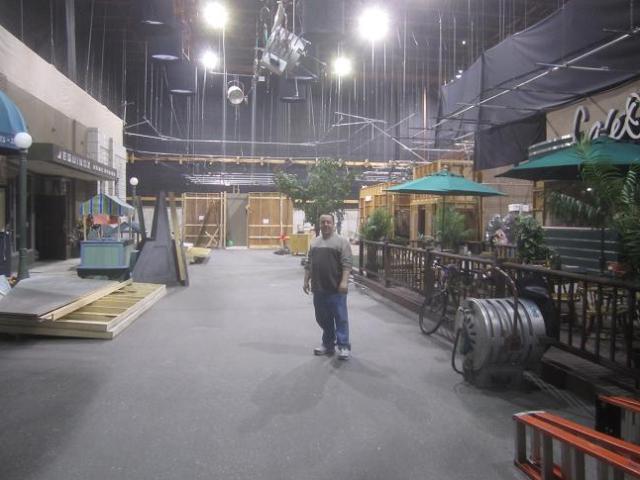
It is the back-end of August 2011 in British Columbia, and at both Vancouver Film Studios and in the mountain ranges surrounding the city affectionately referred to as “Hollywood North,” film crews are hurriedly filming scenes that will appear in the series finale of the television series Eureka.
Less than a month earlier, the same cast and crew thought a different script – one that ended on a cliffhanger to lead into an expected sixth season – would be the last one produced. But the financial realities of the television industry, coupled with the costs involved to produce the long-running – albeit popular – property, instead closed the door on the series.
While it leaves the airwaves on a creative high, the unexpected cancellation left the series in a lurch as the finale for the year had already been written and prepped to start filming. However, after massive fan outcry and co-creator Jaime Paglia’s impassioned plea to end the series on its own terms, a final additional episode was commissioned to wrap up not just the cliffhanger, but the series’ other loose ends and dense mythology. It was the final challenge for a series that has always defied the odds and been a risk-taker by nature.
The origins and fantastical stories of the fictional Oregon town have already been created and shared with its audiences. But to better appreciate its legacy, it is necessary to look to the past with members of the series’ cast, crew, producers and co-creator. What follows is the true story of a little town called Eureka.
Had the initial line of thought for the series’ concept held firm, the Eureka audiences would have seen a drastically different one than what ended up on television screens down the road. After Paglia’s writing partner and Eureka co-creator, Andrew Cosby, sold his first television project, the duo began brainstorming ideas for potential series ideas in the summer of 2002.
“Andy and I had just written a feature film for Akiva Goldsman and Mark Canton. We had been completely focused on features. Then Andy got a foothold in TV and asked, if I was going to create a series, what would I want to do? I’d grown up in this tiny town, Warrenton, Oregon, and I really loved the dynamics of those people. Small towns provide such a unique backdrop for storytelling and allow you to get to know the characters.
So I referenced shows like Twin Peaks and Northern Exposure,” Paglia said. “Andy was a big fan of those shows, along with series like The X-Files and The Twilight Zone. We went through our laundry lists of old ideas to see if we could find a spark of something that would be interesting.”
What emerged was a logline for a half-hour animated series featuring a Homer Simpson-type father raising a Lisa Simpson-type daughter whose IQ tested so high that they were invited to move to a town where geniuses lived. They reassessed the concept and decided it may be better suited to a one-hour live-action format, with drama and sci-fi elements thrown into the comedy mix. By the end of lunch, they had the basic premise of a U.S. Marshal who stumbles onto a secret government think-tank town in the Pacific Northwest, and by helping save the day when an experiment goes awry, he’s reassigned to be the town sheriff.
“I went off and started developing characters and a history for the town,” Paglia notes. “Andy was shooting the first episodes of his series (for the now-defunct UPN Network) called Haunted. I’d go sit on set and we’d kick around ideas and that’s how the show and the concept that stuck were born.”
The series’ bible was written over that summer, and the duo prepared to shop the series around. With the concept being a natural fit for its target audience – and with the cable network beginning to produce its own original scripted programming – Syfy (then still “Sci-Fi”) bought the series pre-emptively in March of 2003. Paglia and Cosby’s joy at the sale was short-lived though, as their first roadblock reared its head.
“NBC merged with Universal, and that sort of derailed getting the pilot pick-up for awhile. It put the pilot on hold while everyone was trying to decide what projects were going to get tossed and which ones [had a shot]. So we thought we were done at that point.”
Thankfully, fate chose to intervene as a few months later, one of NBC-Universal’s new executives would read the pilot script and become enamored with it, giving the series’ journey to TV screens the kick-start it needed. Paglia and Cosby were back on-track, and began assembling a team to help produce the pilot of a series idea conceived over a lunch more than a year earlier. Their next step: building a talented cast.
The main characters in Eureka each had their own specialized roles to play in the structure of the series and making the concept work properly. To give audiences a jumping-in point – someone they could identify with within a town of super-high intellects and scientists – the character of “Jack Carter” was born.
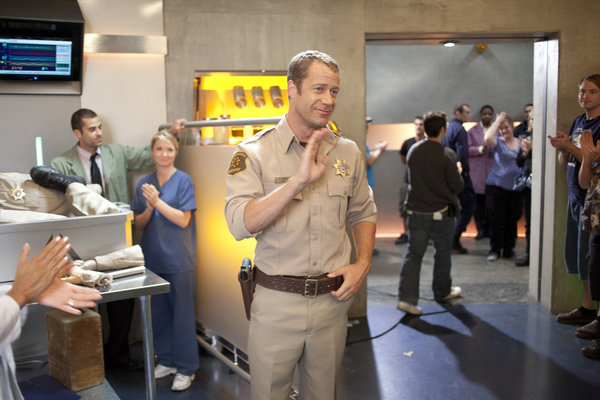
As a U.S. Marshal, Carter would stumble upon the town of Eureka by accident. By pilot’s end, his ability to think “outside the box” yet retain an “everyman” sensibility (in sharp contrast to Eureka’s residents) landed him the job of new town sheriff. Paglia and Cosby found their “Carter” in actor Colin Ferguson, who had just recently come off of NBC’s failed attempt to remake the British comedy Coupling for American audiences.
“It was pilot season, I was going through it and this was a one-hour comedy drama, which I really wanted to do. I didn’t necessarily think it was going to happen, but this came along and I said, ‘Oh, that’s great! That’s really the tone of what I’m thinking,’” Ferguson recollected. “It came along early in the season and it was on Syfy and I thought cable would be good because I’d done two shorter-lived network shows and I really wanted to do something that had a chance to be on the air for a little bit
“It seemed like a good thing, but it wasn’t until I walked in and Jaime [Paglia] was in the room that I knew. Because I usually do what I do and people go, ‘Oh no, we don’t want that. We want no comedy, really be strong and manly,’ and Jaime was like, ‘No, no! That’s exactly what we want. We want a humor undertone to it.’ So it was a perfect storm.”
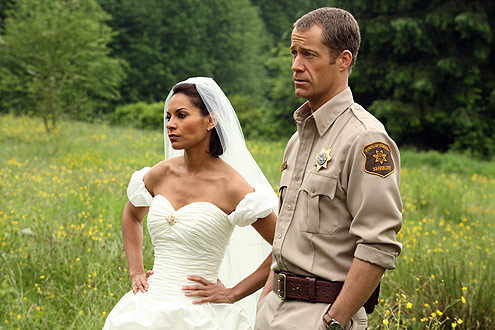
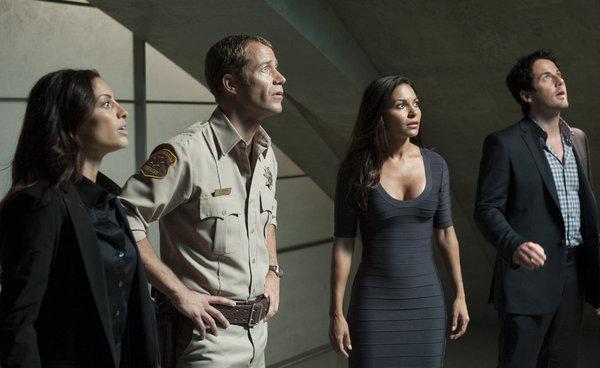
The majority of initial issues that Carter would need to fix came as the result of failed or faulty experiments conducted at Global Dynamics, Eureka’s main employer and a government-contracted company whose charter was to harness the brainpower of the town’s residents for scientific breakthroughs with both consumer and (more importantly) military applications. Cast in the role of Allison Blake, a liaison for the Department of Defense and a potential love interest for Carter was actress and Chicago-native Salli Richardson-Whitfield. The role was one she was hesitant to initially pursue.
“At first, I didn’t read for it because it was in Vancouver. I love Vancouver, it’s very nice, but I didn’t want to be away from home. But it just kept coming back around and I’d test for other shows and didn’t get them and they kept asking,” Richardson-Whitfield notes. “Then when I saw the script … there are just not that many roles that are this challenging and well-rounded.”
“What I really loved was that, initially – maybe I saw one other woman of color at the audition. But they were so open to cast me, even though I don’t think the character was initially supposed to be a black woman. They just went with me because, when I came in, they thought I fit perfectly with Carter. They were blind to everything else and I really appreciated them looking at it that way.”
Cast in the role of Henry Deacon, a Global Dynamics scientist and the town’s “jack of all trades” was actor Joe Morton. Morton likely had the most visibility with audiences at the time after his work in high-profile Hollywood hits like Speed and Terminator 2: Judgment Day. His involvement in Eureka’s pilot ended up being the result of fortuitous timing, even if the character was a bit more undefined than the rest initially.
“I was actually doing an episode of House!” Morton explains. “And the director (Peter O’Fallon) of that episode of House ended up being the same director for the pilot of Eureka, and he recommended me. At the beginning though, with the pilot, I don’t think they knew where he was going to go. [We were] playing with the idea that he was a guy with a really dark past. He’d lived in and out of the bottle after whatever happened in his past. And he had been brought to GD (Global) as a way to pull himself back together again. He was not a team player and never really was.”
Brought in to portray “Josephine ‘Jo’ Lupo,” Carter’s strong-willed deputy – one who immediately holds an initial grudge against him since his arrival costs her the sheriff position – was actress Erica Cerra. A native Vancouver actress, Cerra had already spent the last several years in guest roles on various genre series. It’s the type of material she has always held dearly.
“My dad was a Trekkie so I grew up watching Star Trek and you name it, I watched it,” Cerra said. “I’m really a huge fan of anything sci-fi and fantasy oriented. And I love doing character stuff. It’s really what I have the most fun with, when you get to embody a character, rather than just being yourself onscreen.”
To round out the cast, young actress Jordan Hinson was brought in to portray Carter’s wayward daughter, Zoe, and another Vancouver actor, Neil Grayston, filled the now-unforgettable role of Douglas Fargo, then an assistant to the head of Global Dynamics. While the role of Fargo became much more important over the years to the series, in the beginning it was envisioned as strictly a small and recurring role. Grayston recalled his enthusiasm for the pilot.
“I really liked the pilot script. It just sort of jumped off the page. It was one of those that I think I sat down and read it all in one go,” Grayston recalls. “I was done in like forty minutes or something. And then I re-read it and you could really see who the characters were and everything. It was nice to have something so well-written and fun.”
“He just wasn’t a huge character in the pilot. And once we got [the pick-up to series], I was really only contracted to be in seven episodes, but they just kept throwing me in there and giving me stuff to do, so it was nice.”
With the script, cast and crew in place, production on the pilot commenced on Vancouver Island in 2004 with cast and crew traveling to locations by float plane and staying in hotels. The strength of the pilot finally earned the series an initial eleven-episode order to join the two-hour pilot creating a first season of twelve episodes. The pickup came almost a full-year after production of the pilot, with the first season episodes being produced in 2005. Almost a full four years after their initial brainstorming lunch, Paglia and Cosby’s vision for the series was fulfilled as the pilot episode aired on Syfy on Tuesday, July 18, 2006.
It was an untested format and a gamble for the network, a genre-series without the normal trappings of planets, stars, aliens and spacecraft. In addition, the cast and crew were unaware of whether or not the series would connect with audiences as the entire first season was completed prior to the airdate of Eureka’s premiere. Their answers would arrive much sooner than anyone imagined.
When the ratings for Eureka’s premiere came in, no one was prepared for the success it had become. It was the number-one series for the evening on cable, topping all other programming on any other network. In the end, more than four million people would tune into the premiere, making it the highest-rated series premiere in Syfy’s history, a record that still stands today.
“I had been managing my expectations about how well we’d do,” says Paglia. “But it wasn’t until Mark Stern called and told us the numbers and put it into context that we really realized that we may be on to something and that people were connecting with it. We were making it in a vacuum. Such an insular environment. We just didn’t know. And it took awhile to sink in. The first [San Diego] Comic-Con that we went to, we had a panel and there were about 2500 people in the room, standing-room only. And one of the first questions that came to us was ‘When did you know you were a hit?’ and I responded ‘Right now!’ It was a surreal experience.”
The rest of the first season of the show was mostly intact from the pilot, with the exception of one major casting change. After the season pick-up was approved, actor Ed Quinn was brought into the series to play “Nathan Stark,” the new head of Global Dynamics and ex-husband of Allison Blake, immediately creating an antagonistic dynamic with Carter and the basis for a “love triangle” subplot that would carry on for the first few seasons. It was a role he almost didn’t play.
“The casting process was pretty crazy. Eureka had been picked up to series, but they were casting the role of ‘Nathan Stark’ during pilot season. I had just tested for an ABC show, so I almost didn’t go on the audition for Eureka,” Quinn recalls. “When I did not get that show, I ran over to Eureka last minute. By the time Eureka wanted to test me, I was already testing for another ABC show (Men In Trees) in first position (meaning that one took preference contractually). I went from my network test at ABC to the Sci-Fi Channel building and waited for my attorney to call and tell me whether or not I got the ABC show. When I didn’t, I went up to the Eureka test. The rest is history.”
While Stark would be initially annoyed with Carter, the duo would eventually build a mutual respect for each other. The dynamic and snappy dialogue between the two would become a mainstay that fans loved. Quinn is quick to point out why it worked so well.
“Colin and I had ‘chemistry.’ He and I are really good friends, and when we get on set together, something clicks. Chemistry is something every show wants, every show tries to manufacture, but to get it… well, you gotta get lucky. And in Season One, that relationship was given a lot room to grow. It was really fun, and I think that came through on screen. It was so cool when the audience responded the way it did,” Quinn said. “That being said, I give a lot of credit to Colin. He’s a comedic genius. He knows innately how to turn a joke. He sets jokes up perfectly. Sure, I’d hit the punch line, but at lot of the time it was his reactions that were comedy gold.”
The rest of the first season would continue to find a very strong audience, and Paglia is quick to point out some of the episodes that he felt were done the most justice – by balancing both the emotional and scientific aspects with equal weight.
“I was really a fan of ‘Many Happy Returns’ and doing something different with the idea of cloning,” Paglia said. “A woman finds out that her ex-husband cloned her, and had a child with that clone. And now her ex-husband and her clone have died, but they had a son who is [now orphaned]. It’s biologically hers, but she’s never met him before. It brought up interesting issues, like emotional attachments and obligations and whether she should have any. It was an interesting character story.”
“The finale, ‘Once In A Lifetime’ also remains one of my favorites. We wrote it under such deadlines, prepping the episode three days before the first draft of the script was done. But I think it’s ultimately the episode where we found the right balance between real, emotional, character-driven drama and keeping the humor that’s sort of the signature of our show. Colin and Joe just really brought it, especially in the episode’s final minutes. It’s the episode we used as a benchmark for what we could do when we went into Season Two.”
The series would return to screens almost precisely a year later for another thirteen episodes, with the season premiere again being the most-watched program on all cable networks for the day. But it did so without the partnership with Cosby, who had opted to move onto other projects, leaving Paglia with the creative reins for the foreseeable future. But the series wouldn’t miss a beat, with both critical approval and fan momentum continuing to rise. But while Paglia cites several episodes as ones he loves, he’s not above criticizing an episode or two if he feels it didn’t live up to its potential
“If we had more time, we could have done a better job with ‘Primal,’ which was the “multiple Stark” episode. It was actually a story that we had thrown out, but when we needed to fill a slot last minute, we brought it back to life and re-broke it in record time,” Paglia recalls. “We’ve always had this rule within the series bible where we wouldn’t cross the line between science fiction and magic. And I think that episode crossed the line. The suspension of disbelief was just too much, at least for me. It’s one I wish we could have done differently. But ironically, it’s a fan favorite.”
Also a fan favorite was a recurring character who would eventually become a series regular – slacker genius Zane Donovan, portrayed by Niall Matter. The character, who would become a love interest for Cerra’s “Lupo,” was meant to bring an “X-factor” to the series, someone who would shake up the mix of personalities – a conceit that Matter was happy to oblige.
“When I got the breakdown for Eureka, I read the character description of Zane and I just thought, ‘This is me! I’m that guy!’” Matter remembers. “It’s not like Zane didn’t want to give back in the beginning. He stole money and then he donated it. He was always someone who wanted to give back. He just didn’t necessarily agree with authority. I’ve been there!”
The series would continue to flourish and end Season Two on a high note. Syfy took notice and rewarded the series with an extended episode order for Season Three, granting Paglia and company eighteen episodes instead of the typical thirteen. But any sense of complacency the series might have felt was about to disappear, as the theme of Season Three – not just behind the scenes but within the series itself – would focus primarily on one thing: change.
Season Three of the series was very much a transitional season on many fronts, both behind-the-scenes and in front of the camera. With eighteen episodes to play with, the decision was made to make the year more story-arc driven than in previous years, with two major subplots occurring in either half of the season. And the “mystery of the Artifact” plot-thread, one that had been in play since the series premiere, was essentially abandoned.
Also retired from the series was the character of Nathan Stark – actor Ed Quinn would take his leave from the show after only a handful of episodes at the beginning of the third year. But contrary to some speculation, the decision to remove the character from the series was always story-based and not precipitated by any other issues.
“We felt like we were treading water a bit with the love triangle with Carter, Allison and Stark. And we didn’t want to,” Paglia said. “There are only so many ways that you can have a main character saying ‘Carter, you’re stupid’ before you go, ‘OK, this dynamic is starting to wear thin.’ So we brainstormed what to do to shake things up and have emotional ramifications that would carry forward and change things. “And killing a main character is one of the best ways to do that. We also wanted the audience to know this was a show where anything can happen and that we weren’t afraid to take those risks.”
While some fans were put off by the character’s departure, it still allowed for a changing of relationship dynamics with other characters, which Ferguson found refreshing.
“We missed Ed [when he left]. But one of the strange strengths of this show is its additional characters and ability to bounce back,” Ferguson said. “It opened other avenues. And a show that goes down because they lost a person was going to go down anyway. You have to be stronger than one person. And we have a great ensemble.”
While the season was always envisioned as having two separate halves, the production of it was also split, as the Writers Guild of America strike in 2007-2008 forced production on additional storylines to cease after the finished scripts had been completed. Faced with an incomplete series order, Syfy made the decision to air only the first 8 episodes of the season in the summer of 2008. With the strike completed, production on the rest of the season’s episode order was finished and the remaining episodes aired in the summer of 2009. By that point, Syfy had already rewarded the series with a fourth season order of twenty more episodes that were already well into production.
Plot lines in the back half of Year Three also mirrored the concept of change. Allison Blake would discover she was pregnant with Stark’s daughter and give birth before the season would end, a plot device meant to work around actress Salli Richardson-Whitfield’s real-life pregnancy. Fans hoping to see a budding romantic relationship build between Carter and Allison were forced to wait longer as “Dr. Tess Fontana,” played by Jaime Ray Newman, entered the picture as a potential – and ultimately failed – love interest for Carter. And series regular Jordan Hinson would leave the series as a permanent member at season’s end when Zoe leaves for college.
After what was a somewhat tumultuous season marked by some large shifts in both plotlines and production, you might believe the series was ready to take a breather, relax and rest on its laurels for a while. But as the series entered Season Four, it would do the unthinkable. It’s one thing to “press the reset button” on a series, and another thing to hold that button down indefinitely. Accustomed to challenges, Eureka chose the latter.
The Season Four premiere would find Jack Carter nursing a broken heart and getting ready to enjoy Founders’ Day, a festival celebrating the town’s origins. By the end of the show’s first episode, any notion viewers had for where the season’s journey would take them were completely obliterated as a time-traveling accident to 1947 – combined with some meddling with the timeline – returns them to a Eureka far different from the one they left.
“Camp Eureka was an idea I’d wanted to do since Season One, but we put it on the backburner because we wanted the show to earn it. You want to get to know characters before you reveal secrets about them or turn things on their head,” Paglia said. “Season One was too soon. Season Two was still too soon. And Season Three, with the strike and other production issues, it would have been cost-prohibitive since we wouldn’t be using standing sets, props and costumes. Period episodes are a huge challenge.”
“Originally, the Season Four order was going to be for 22 episodes. We were going to do a two-hour movie, and then twenty episodes. Bruce Miller, who was co-showrunning with me by this point (after joining the staff as a consulting producer mid-way through Season Two) suggested maybe now would be the right time to do this idea,” Paglia said. “And even though the order dropped to twenty, we got attached to this idea, and we had a slightly bigger budget for the season premiere that we thought could maybe pull it off.
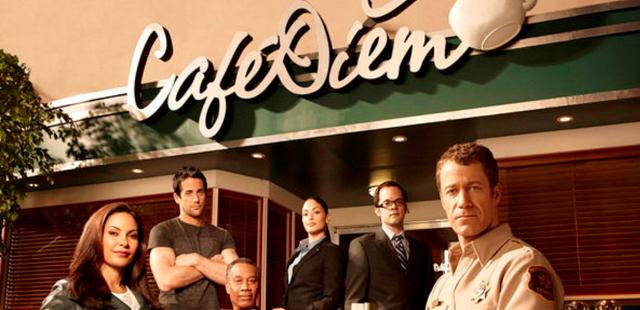
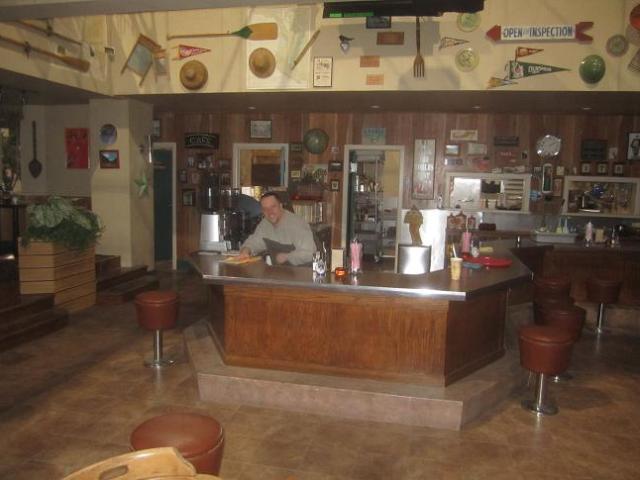
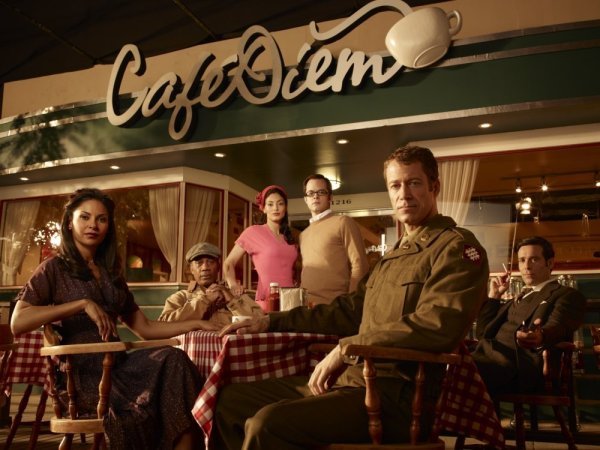
We had always planned that when they returned from [the 1940’s] there would be some small change. And in discussing what that would be, like the Archimedes statue, or the décor in Café Diem, it hit us: “We don’t have to limit ourselves to changing one thing. We can change anything. We can change everything!”
That idea set in motion a flood of story possibilities, many of which had already been bandied about in the writer’s room. Co-showrunners Paglia and Miller had put together a largely new writing/producing staff between seasons, bringing on former NBC/Universal Studio production executive Todd Sharp as a co-executive producer, along with co-EP/writers Eric Tuchman, Amy Berg, Ron Milbauer & Terri Hughes Burton, and Jill Blotevogel, co-producer Paula Yoo, story editor Eric Wallace, staff writers Kira Snyder and Ed Fowler (and later, John Herrera & Nina Fiore). The team quickly mapped out the arc for the season.
“We always felt like we wanted Fargo to eventually grow and become the head of Global Dynamics. We had wanted to find a new love interest for Henry. We were at a point where we felt like it would be interesting to finally put Carter and Allison together,” Paglia said. “And we really wanted to get Jo into GD so that she could have her own domain and be her own boss. And we said ‘Wouldn’t it be great to just have it all happen in one fell swoop?’ And have the characters struggling to figure things out, without being able to tell anyone.”
They brought the proposed storyline to Syfy, and the network loved the idea. But the inevitable question of when things would revert to normal came up. When Paglia and Miller said, “They don’t,” it raised eyebrows.
“It was a serious discussion,” Paglia recollects. “The network felt like it may be something that would hurt the franchise. But we reasoned through it with them…that our audience has been so completely loyal and has followed us through three different time-slots on three different nights after nine-month hiatuses. They believed they could handle this, too. And we were extremely lucky that our execs supported us.”
Actor James Callis, whose brilliant work on the re-imagined Battlestar Galactica had won him many fans, was brought in to play “Dr. Trevor Grant,” one of Eureka’s founders and co-inventor (along with Albert Einstein) of the Bridge device that brings the Eureka gang to the past — and Grant into the future. In addition, the Season Four premiere introduced Tembi Locke to the series as “Dr. Grace Monroe.” Initially someone that Henry meets briefly in passing, he returns to the altered Eureka to find that he is married to her. Locke finds the character extremely gratifying.
“Grace really leads from her heart. Her intellect certainly has its place. It’s what has gotten her where she is professionally and it’s what Henry really [learns to] love and enjoy about her,” Locke said. “But she is also really heartfelt, which is why the arc of them having the difficulty in their relationship and then having to find their way back, I could really put my hooks into that. I love that as an actor.”
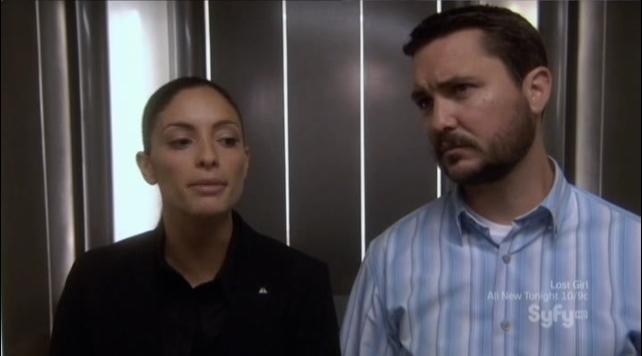
Season Four also introduced two other new recurring characters to the series: “Dr. Isaac Parrish,” portrayed by Wil Wheaton of Star Trek: The Next Generation fame, and “Dr. Holly Marten,” played by geek goddess Felicia Day. Both served to enhance storylines for Douglas Fargo with Marten envisioned as a potential love interest and Parrish being an adversarial nemesis in both matters at Global and in Fargo’s budding relationship with Holly. Actress Ming-Na, fresh off a two-year stint on Stargate Universe was also brought in to portray “Senator Michaela Wen,” a character whose arc would last well into the next season.
What was a matter of necessity in Season Three became a matter of choice for Season Four as Syfy took the series’ fourth year and stretched it out over two separate summers, airing the first half in 2010 and the latter half in 2011. In the back half of the season, Fargo and Zane would unwittingly launch themselves into outer space, and their solution to get home would later launch a new intiative for Global Dynamics — conducting the first manned mission to Titan, Saturn’s largest moon.
The construction of the ship that would carry them (the Astraeus), preparations for the trip, and the disasters Carter would need to avert as a result, would guide the storylines through the end of the season. Though same-day ratings for the series had begun to decrease by this point (as DVR numbers grew), the series was still a juggernaut for the network and a Season Five renewal was handed down early on, well before the summer 2011 episodes of Season Four had aired. While viewers were just getting back into the groove that summer, production was already very much underway on Eureka’s fifth – and what would be final – season.
We will be back with part two of my Eureka special report soon!
Please feel free to leave a comment here, click an icon below to share this interview or you can visit and follow me on Twitter by clicking on my avatar to the right.
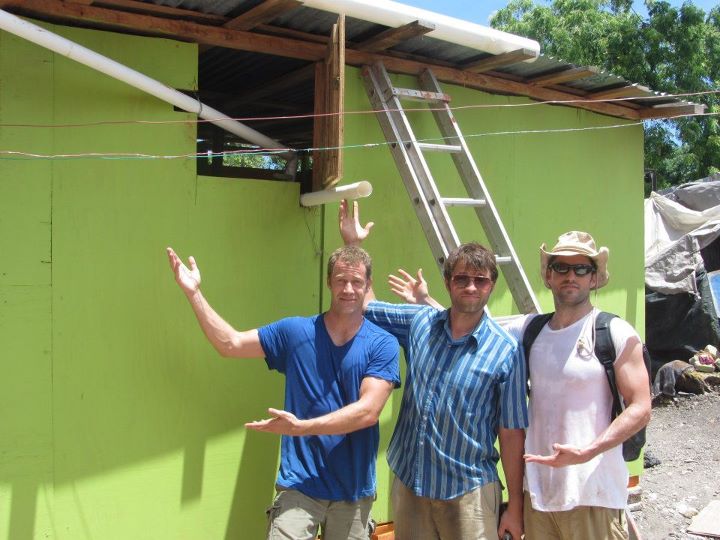
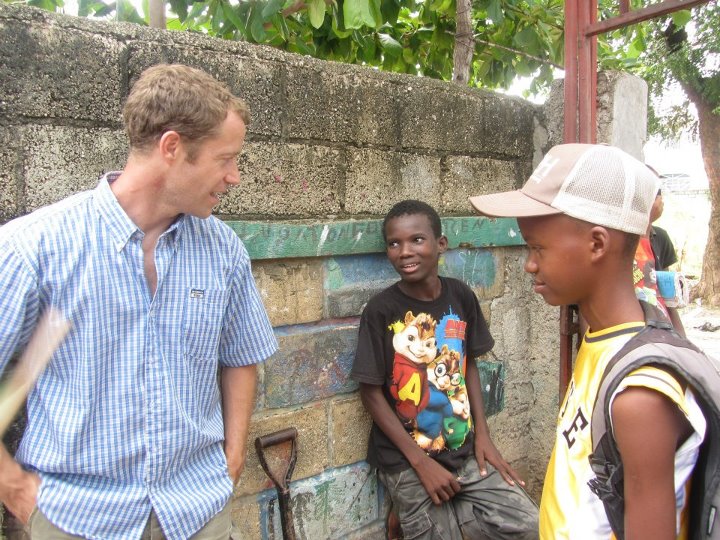
This past Sunday June 24, 2012 we were honored with an interview from Mr. Colin Ferguson who joined us 6 PM Pacific, 9 PM.EST to discuss his recent charitable journey to Haiti where he and friend Misha Collins worked with Haitian Reconstruction!
Colin Ferguson was in Haiti helping build a wonderful new school for those in need who are still struggling to survive and restore a sense of normalcy to their nation after the devastating earthquake in 2010.
Traveling a great distance from the Los Angeles area, Colin worked tirelessly in Haiti to help the people! Colin Ferguson brought his boundless energy, determination and dedication to the task thereby bringing many smiles to the faces of the still suffering Haitian citizens from his fantastic charitable efforts!
Courtesy Colin Ferguson Facebook page
How can you can help bring smiles to the people of Haiti as well? Simple! We can all support the same fine charity organizations as Colin Ferguson did by donating to Hope For Haiti and “Crowd Rise” hosted by The Random Act.
As you can see for yourselves, from the images regarding his charity trip to Haiti, the outstanding work performed by Colin supporting Haitian Reconstruction, his selfless acts made many people happy! This included his many fans who helped make the project possible with their generous donations!
Image courtesy Colin Ferguson’s Facebook page
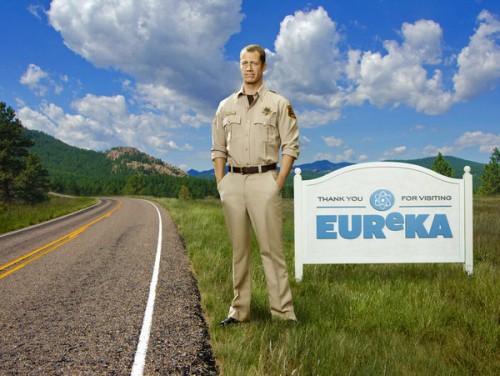
Mr. Ferguson’s acting career spans seventeen years in Canada, the United States and Europe. Perhaps best known as the steadfast, persistent and lovable Sheriff Jack Carter in Eureka, Mr Ferguson’s career has brought enjoyable entertainment to his fans in television series and movies including CSI: Miami, Lake Placid 3, Line of Fire, and Malcolm in the Middle.
During our seventy-five minute interview with Colin Ferguson, he shared many details his Haiti Reconstruction experiences including learning dealing with the challenges posed by the tragic 2010 earthquake which laid waste to that impoverished nation.
We hope you enjoy listening to our exclusive interview about Haitian Reconstruction with Colin Ferguson as much as we did in conducting it and bringing it here at You Decide for you!
Courtesy Colin Ferguson Facebook page
Thank you for reading. listening and visiting WormholeRiders News Agency. We will return next weekend at a new time for another exciting You Decide interview with our next special guest to be announced later this week. Please note that we are changing the broadcast time for the foreseeable future to 5 PM PST / 8 PM EST so as to not conflict with Falling Skies east broadcasts on the great TNT Network!
Please feel free to leave a comment here or if you prefer, click the social media icons below to share this news article.
Or as many of our readers and visitors often do, visit WHR on Twitter, WHR on Facebook or visit me on Twitter by clicking the text links or images avatars in this news story.
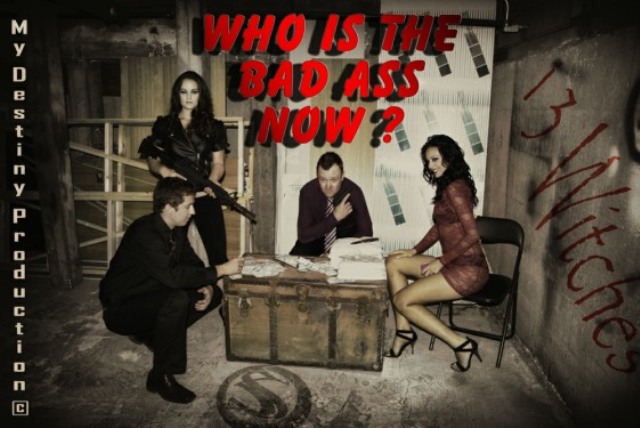
As we have done at our Movie Magic news site for independent films, this month we continue our new 2012 focus covering independent, or “Indie” television entertainment productions with an exciting new web series product from My Destiny Productions of Canada; 13-Witches!
This fantastic new web series is described by the creators as:
“13 Witches is the story of 13 sisters who practiced the art of paganism during the 1700s.
The sisters were wrongfully accused of being witches, and in turn, they were tortured, punished, and ultimately burned alive at the stake by those that they loved.
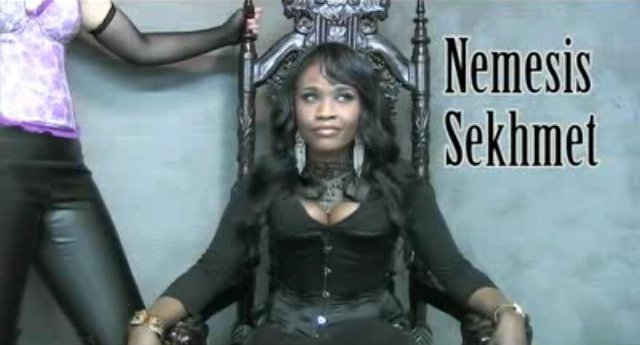
Only one escaped. Her name was Nemesis Sekhmet. Nemesis struck a deal with the devil in order to have her 12 sisters reincarnated. Centuries later, the sisters have come back and seek revenge on all of those who stole their lives from them.”
In these days of tight television budgets due to the continuing fluctuations creating uncertainty in the economy, many studios and networks have turned to shorter pilot television seasons of between 10 to 13 episodes to reduce potential financial exposure in the event a series is not received favorably by the viewing audience.
Others have successfully employed the use of Internet web web series as a method to “seed” scripted television programs to determine if a series is viable as a network television property. The stakes are high and the results are varied, however many have learned a recipe for producing a quality product with believable story arcs..
13 Witches the web series leverages the creative talents Sabine Mondestin featuring a large talented ensemble cast starring many actors from television series and movies we know. The cast and creators endow 13 Witches with a television series look and feel as we learned after meeting and interviewing the gifted and lovely Lauren Watson shared when she guest hosted with WHR on heart health, 13 Witches is a quality production with much thoughtful planning having gone into the execution of the project.
One of the delightful aspects of web series development today as compared to the days of its infancy, is that the medium itself, digital video, via YouTube, Vimeo, Daily Motion, and easy to implement web video players have encouraged a rapid growth of this burgeoning Internet genre to the delight of the the fans who enjoy seeing new entertainment products.
Therefore, in order to thrive, web series must, based upon their own creative merits, produce a compelling product to attract viewers or face withering competition in today’s fast moving entertainment landscape.
Some series in specific have achieved stellar status such as Sanctuary which originally launched as a web series in late 2007 to become a hit television program for four seasons.
With the decline of science fiction scripted series, fantasy series like “13 Witches” series have enjoyed a resurgence on television, movie and critically, in the Internet web series arena as we discussed with Lauren Watson in her recent interview (above).
Launching in a few weeks from now in April 2012, 13 Witches is poised to repeat web series successes of the past with a compellingly dark sexy Internet adventure!
The 13 Witches team has done a good job of raising awareness for their product by releasing an ongoing series of fun and enjoyable behind the scenes (BTS) videos documenting the progress of the production attracting some 100,000 views of the recently released promotional trailer and behind the scenes videos included below.
We include the press release and the rest of the beautiful “13 Witches” for your enjoyment!
13 Witches Press Release:
There is an exceptional new web series available on the Internet that is called 13 Witches, an amazing story about 13 sisters who were persecuted in the 1700s.
This web series, profiles the story of 13 sisters who practiced the art of paganism during the 1700s. The sisters were wrongfully accused of being witches, and in turn, they were tortured, punished, and ultimately burned alive at the stake by those that they loved.
Only one escaped. Her name was Nemesis Sekhmet. Nemesis struck a deal with the devil in order to have her 12 sisters reincarnated. Centuries later, the sisters have come back and seek revenge on all of those who stole their lives from them.
The 13 sisters are very sexy, and this web series offers a dark yet comedic take on the thoughts and feelings of persecuting witches during the 18th century.
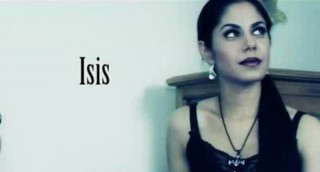
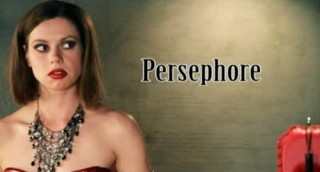
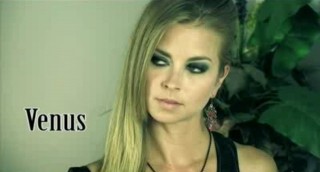
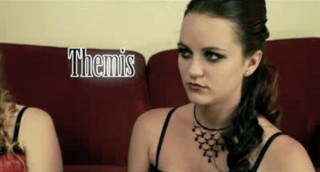
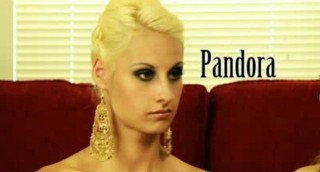
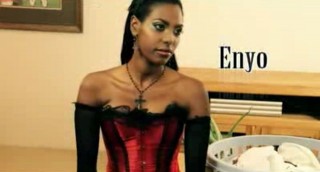
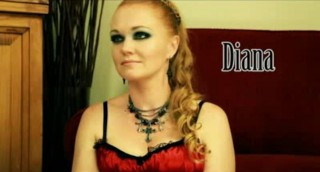
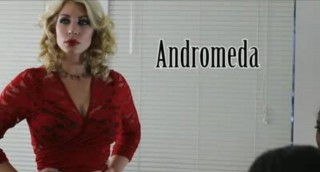
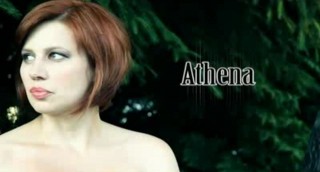
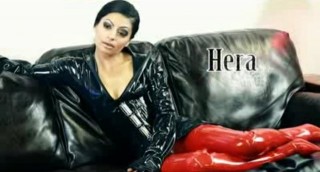
Among Nemesis, played by Sabine Mondestin (Speak Now, Frankie and Alice), the 12 other characters in the web series are Lilith, played by Paula Elle (Smallville, 2012), Isis, played by Natasha Davidson, Persephore, played by Valerie Pauwels (Girlfriend Experience, Intelligence), Venus, played by Lea Kovach (Fringe, Eureka), Hera, played by Sara Akeera, Eurybia, played by Wanda Ayala, Enyo, played by Adiam Asrat, Pandora, played by Lila Popa (American Pie: The Book of Love), Themis, played by Lauren “Lolly” Watson (Sanctuary, This Means War), Diana, played by Nicole Rockmann (Riverworld, Guido Superstar: The Rise of Guido), Diana 2 played by Andrea Stefancikova, Andromeda, played by Victoria Vice (Jiggy Cafe), and Athena, played by Marie E. West (Fringe, Hot Tub Time Machine).
This web series, produced by My Destiny Productions, showcases these 13 sisters as well as the deal Nemesis made with the devil. This web series was created by Sabine Mondestin and co produce by Steve Lareau, offers a dark, mysterious and sexy take on the classic which tale.
13 Witches is a unique take on the ultimate vengeance against those who have done them wrong. Their quest for total world domination is coupled with a superior storyline, incredibly sexy actresses, and the most unique witch story ever told. Each of the 13 sisters have their own unique personalities, yet they share the same dream of revenge and domination.
This web series is currently available to watch on YouTube, and is increasing in popularity with many subscribers.
The company that created 13 Witches, My Destiny Productions is located in Canada. This is clearly an up-and-coming production company, and is certainly one to look out for in the future.
Despite the fact that you currently cannot watch the entire series of 13 Witches, it is important to become a subscriber so do not miss the show’s premiere as well as subsequent episodes.
This story is replete with demons, the devil, witches, and ordinary citizens. It is unusual to see such extraordinary talent, storylines, and superior acting on the likes of YouTube.
13 Witches may in fact be the sexiest which story ever told. You certainly do not want to miss out on the previews, teasers, and behind-the-scenes episodes of the making of 13 Witches.
Available for viewing on YouTube, 13 Witches can easily be found by a search of YouTube, or by visiting their home website at www.13-witches.com.
Discover for yourself the story; learn about the cast and crew, as well as view previews and behind-the-scenes episodes on their website.
Discover for yourself the greatest story about Witches that may have ever been told. Check out this new Web Series called 13 Witches, and experience exceptional horror fantasy entertainment!
See for yourself this amazing story, and learn about the cast and crew as well as reviews, previews, and special behind-the-scenes episodes.
Do not miss out on the exciting new “13 Witches” web series playing on a computer or mobile device near you!
This is likely the best witch story ever told!
Please feel free to share this article with your friends, co-worker and or family. We would also appreciate your comments and look forward to you visiting in the future.
Or as many of our readers and visitors often do, visit WHR on Twitter, or visit me on Twitter by clicking the text links or images avatars in this news story. I and the WHR team look forward to Seeing You on The Other Side!”


 We will be back soon to conclude reporting on our adventures this year at San Diego for Comic-Con 2024 with an interview with a famous Graphic Novelist, including more exclusive interviews featuring details dished to fans during Press Rooms that we covered! In the meantime, please feel free to share this article with your friends, co-workers and or your family!